
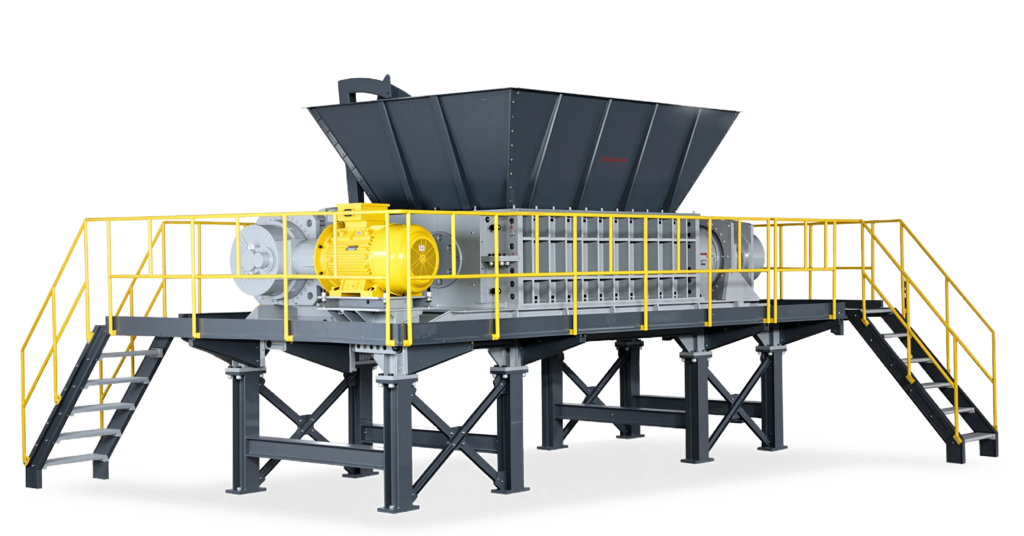
A twin shaft shredder is a powerful industrial machine designed to process bulky, tough, and difficult-to-handle solid waste into smaller, more manageable pieces. Equipped with two rotating shafts and interlocking cutting blades, this machine uses shearing, tearing, and cutting forces to break down a wide range of materials. From industrial waste and scrap metal to waste plastics, discarded furniture, and rubber products, a twin shaft shredder helps recycling facilities improve material handling efficiency, reduce waste volume, and support resource recovery.
As industries face increasing pressure to improve waste management and promote sustainable production, reliable shredding equipment has become essential. GIGAPA provides industrial shredding solutions designed to meet different material processing requirements, helping businesses build more efficient and practical recycling operations.
What Is a Twin Shaft Shredder?
A twin shaft shredder, also known as a double shaft shredder, is an industrial-size reduction machine that uses two parallel rotating shafts to shred materials. Each shaft is fitted with cutting blades that work together to pull, shear, and tear incoming waste into smaller pieces.
Unlike some high-speed shredding machines, a twin shaft shredder typically operates at relatively low speeds while delivering high torque. This operating principle makes it suitable for processing bulky materials that require substantial cutting force.
The two shafts rotate in coordinated directions, allowing the blades to grip and process materials progressively. Depending on the machine configuration, the output size is influenced by factors such as blade design, cutter thickness, shaft speed, material properties, and the presence of a screen or secondary processing equipment.
For recycling businesses handling mixed or irregular waste streams, a twin shaft shredder can serve as the primary size-reduction stage before sorting, conveying, compacting, or further processing.
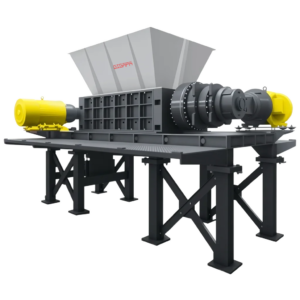
How Does a Twin Shaft Shredder Work?
The working principle of a twin shaft shredder is based on the combined action of two rotating shafts and their cutting blades.
-
Material Feeding
Waste materials are loaded into the shredding chamber through a hopper. Depending on the material and equipment configuration, feeding may be carried out manually or through a conveyor or other material-handling system.
-
Shearing and Tearing
As the two shafts rotate, the cutting blades grip the incoming material and pull it into the cutting chamber. The interlocking cutters apply shearing and tearing forces to gradually reduce the material into smaller fragments.
This mechanism is particularly useful for processing materials that are difficult to break down through simple crushing alone.
-
Continuous Discharge
After shredding, the processed material is discharged from the machine. The output can then be transported for sorting, recycling, briquetting, baling, or additional size reduction.
The final particle size depends on the machine design and the characteristics of the material. If a specific output size is required, the complete processing line may need additional screening or secondary shredding equipment.
Key Advantages of a Twin Shaft Shredder
Choosing the right industrial shredder can significantly influence productivity, operating costs, and the efficiency of a recycling line. A twin shaft shredder offers several advantages for heavy-duty waste processing.
-
High Torque for Tough Materials
The twin-shaft configuration provides strong pulling and shearing forces, making the machine suitable for bulky and challenging materials. Depending on its design and power configuration, it can process materials such as thick plastics, rubber products, industrial offcuts, and selected metal scrap.
For businesses that regularly handle irregular waste, this capability can help reduce the need for extensive manual size reduction.
-
Efficient Volume Reduction
Bulky waste often occupies considerable storage and transportation space. By reducing materials into smaller fragments, a twin shaft shredder can improve storage efficiency and make downstream handling easier.
The degree of volume reduction depends on the feed material, its original shape, and the resulting particle size. Proper equipment selection helps ensure that the shredding process meets the practical requirements of the recycling operation.
-
Stable Processing Performance
Low-speed, high-torque operation is a common feature of industrial twin-shaft shredders. Compared with certain high-speed cutting systems, this configuration can be advantageous when processing large, irregular, or difficult-to-feed materials.
Actual operating stability depends on motor sizing, drive configuration, blade condition, maintenance, and the characteristics of the waste being processed.
-
Flexible Material Applications
A twin shaft shredder can be configured for different waste streams by adjusting factors such as shaft power, blade geometry, cutter arrangement, and chamber dimensions.
This flexibility makes it useful across various recycling industries. However, not every model is suitable for every material. Hardness, thickness, abrasiveness, moisture content, and potential contaminants must be considered before selecting a machine.
-
Improved Downstream Handling
Shredding is often the first step in a larger recycling process. Reducing the size of waste materials can make them easier to convey, sort, compact, or transport to the next processing stage.
When integrated with suitable conveyors, separation systems, or balers, a twin-shaft shredder can help create a more organized and efficient material recovery line.

油桶-300x188.jpg)
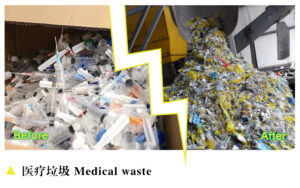
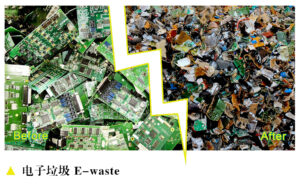
What Materials Can a Twin-Shaft Shredder Process?
One of the main reasons businesses choose a twin-shaft shredder is its ability to handle diverse waste materials. The actual processing range depends on the machine model and configuration.
-
Plastic Waste
Plastic drums, containers, pipes, industrial plastic offcuts, and other suitable plastic products can be processed into smaller pieces. Shredded plastic may then enter washing, sorting, granulation, or other recycling processes.
For plastic waste containing metal inserts or other contaminants, a suitable inspection and separation process may be necessary.
-
Scrap Metal
Selected metal scrap, light metal components, and certain metal products can be processed using appropriately designed heavy-duty shredding equipment. However, ordinary twin-shaft shredders are not automatically suitable for thick steel plates, hardened metal, or every type of metal scrap.
Businesses processing heavy metals should confirm material dimensions, hardness, cutting requirements, and machine specifications with the manufacturer before purchasing equipment.
-
Rubber and Tires
Rubber products, industrial rubber waste, and suitable tire-processing materials may be shredded to facilitate further recycling or disposal. Tire processing can require specialized blade arrangements and multiple processing stages, depending on the required output.
-
Wood and Bulky Waste
Wood offcuts, discarded furniture components, wooden packaging, and certain bulky waste materials can be reduced in size using a suitable twin-shaft shredder.
Removing nails, metal fittings, stones, and other contaminants where necessary helps protect the cutting system and improve operational reliability.
-
Industrial and Mixed Solid Waste
Some industrial waste streams contain different materials that are difficult to handle with conventional equipment. A twin shaft shredder can be considered for selected mixed waste applications, provided that the material composition and potential hazards are evaluated first.
Hazardous waste, pressurized containers, batteries, and materials that may create fire, explosion, or toxic exposure risks require specialized assessment and appropriate safety controls before processing.
Common Applications of Twin Shaft Shredders
Twin shaft shredders are used in many industries where waste size reduction is an important part of production or recycling.
Recycling plants: Reduce suitable plastic, rubber, and other recyclable waste before sorting and further processing.
Manufacturing facilities: Process production offcuts, rejected components, and selected industrial waste to improve waste handling.
Scrap recycling operations: Prepare compatible scrap materials for sorting, transportation, or subsequent processing.
Waste management companies: Reduce the size of suitable bulky waste and improve handling efficiency.
Furniture and mattress recycling: Process selected discarded furniture components and bulky materials, subject to the machine’s cutting configuration and material limits.
Resource recovery projects: Integrate shredding equipment into systems designed to recover reusable materials and reduce the amount of waste sent for disposal.
Each application has different requirements. A machine that performs well with plastic waste may not be appropriate for heavy metal scrap or abrasive materials. A material assessment is therefore an important step before equipment selection.
Twin Shaft Shredder vs. Single Shaft Shredder
Although both machines are used for industrial-size reduction, twin-shaft and single-shaft shredders have different working principles and typical applications.
A twin-shaft shredder uses two rotating shafts to grip, shear, and tear materials. It is often considered for bulky waste, irregular feed materials, and applications where strong pulling forces are important.
A single shaft shredder generally uses one main rotor equipped with cutting blades. Many models work with a hydraulic pusher and a screen to control the output size. This configuration can be suitable for applications requiring more controlled particle-size reduction.
The main differences include:
- Cutting mechanism: Twin shaft shredders use two interacting shafts, while single shaft shredders use one primary rotor.
- Material handling: Twin shaft designs can be advantageous for bulky, irregular materials that need strong gripping and tearing forces.
- Output control: Single shaft shredders equipped with screens may offer more direct control over the maximum output size.
- Application requirements: The best choice depends on material type, throughput, target particle size, and downstream processing needs.
Neither design is universally better. The right machine is the one that matches the actual material and production objectives.
Why Choose GIGAPA for Twin Shaft Shredding Solutions?
GIGAPA specializes in industrial machinery for waste processing, recycling, and resource recovery. With more than 10 years of industry-related research, development, and manufacturing experience within its team, GIGAPA focuses on providing equipment solutions that address customers’ practical processing challenges.
Our product range includes shredders, baling machines, and hydraulic components for different industrial applications. By understanding the material to be processed and the customer’s production goals, we can help identify an appropriate equipment configuration.
When discussing a twin shaft shredder project with GIGAPA, customers can provide the following information:
- Material type and composition
- Material dimensions and thickness
- Required processing capacity
- Desired output size
- Available power supply
- Preferred feeding and discharge methods
These details help the sales team evaluate the application and recommend a suitable solution.
Rather than selecting a machine based on price alone, businesses should consider processing performance, maintenance requirements, compatibility with existing equipment, and long-term operating costs.
Conclusion
A Twin Shaft Shredder is a valuable solution for businesses that need to reduce bulky, irregular, and difficult-to-process solid waste. Its two-shaft cutting mechanism provides strong shearing and tearing action, supporting a wide range of suitable recycling and waste management applications.
From plastic recycling and rubber processing to industrial waste reduction and selected scrap preparation, the right twin-shaft shredder can improve material handling and support more efficient resource recovery.
However, performance depends on the material, machine configuration, required capacity, and target output size. Careful evaluation before purchasing helps businesses choose equipment that meets their actual production needs.
If you are looking for an industrial shredding solution, contact GIGAPA to discuss your material processing requirements and explore suitable equipment options.